

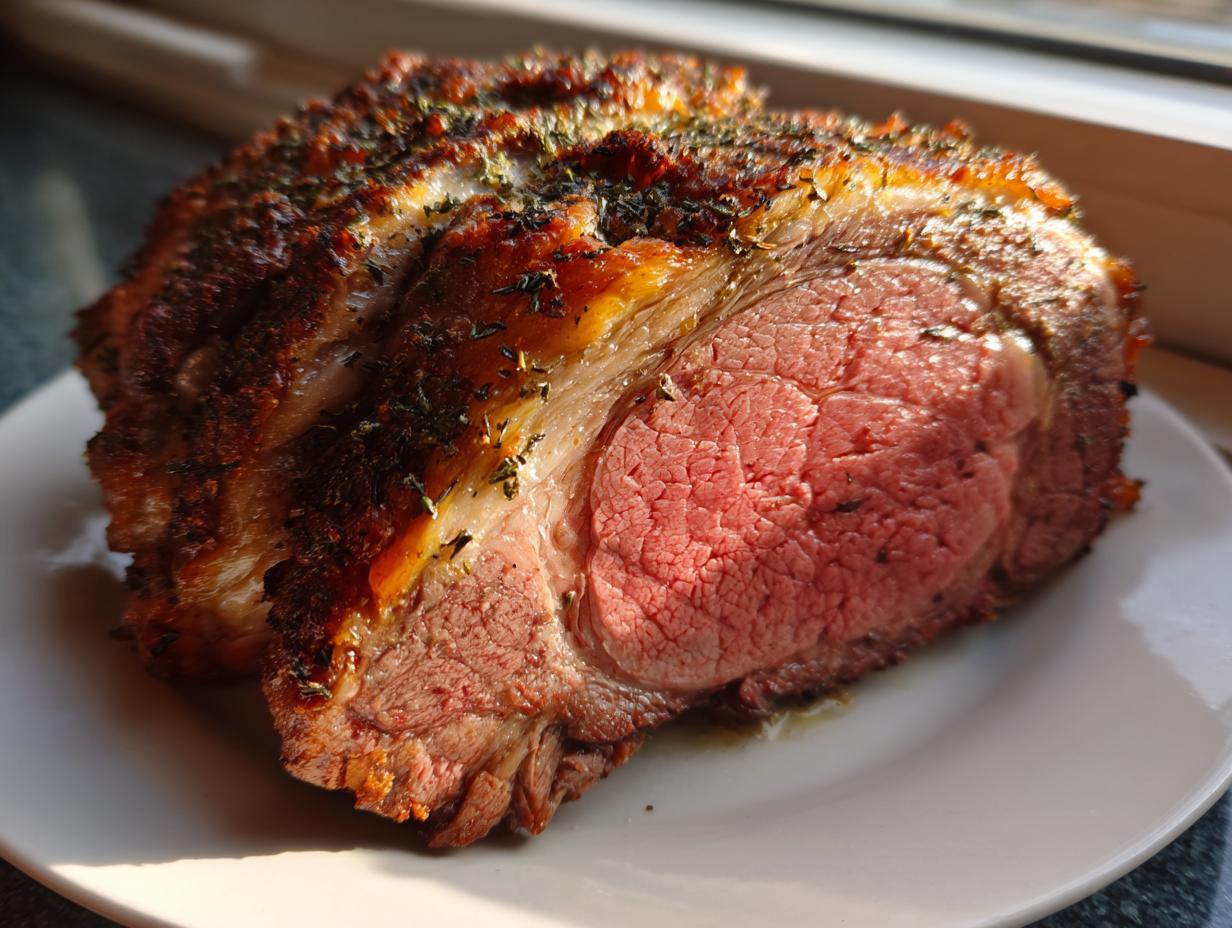
Let’s be honest—the idea of cooking a massive, gorgeous rib roast can feel like standing at the edge of a culinary cliff, right? It’s the centerpiece for Christmas or that big Sunday dinner, and one wrong move means throwing away a lot of expensive beef. But here at Food Dexterity, we don’t do intimidating. We do achievable, delicious magic. This recipe for a **Foolproof Oven Roasted Prime Rib Roast** is the culmination of testing until we found the absolute easiest way to get that deeply flavorful, ridiculously tender result you see in magazines. Seriously, the secret weapon here is simple: a robust Garlic Herb Butter that locks in every bit of moisture. Forget stress; we’re making you the hero of the holiday table.
- Why This Foolproof Oven Roasted Rib Roast is Your New Holiday Favorite
- Ingredients for the Garlic Butter Rib Roast
- Preparing Your Standing Rib Roast Instructions
- How to Cook Rib Roast: The Two-Temperature Oven Technique
- The Essential Resting Period for a Juicy Roast Beef Recipe
- Oven Roasted Rib Roast Guide: Carving and Serving
- Tips for Success with Your Celebration Beef Recipe
- Frequently Asked Questions About Cooking a Rib Roast
- Storage and Reheating Instructions for Leftover Rib Roast
- Storage and Reheating Instructions for Leftover Rib Roast
Why This Foolproof Oven Roasted Rib Roast is Your New Holiday Favorite
I know you want the flavor of a fancy steakhouse without the guesswork, especially when you’re cooking for a crowd. That’s exactly what this method delivers. It’s designed to be forgiving, which is why I call it my **Easy Holiday Roast** favorite. You get that incredible, deeply savory crust and a center that absolutely melts in your mouth.
Here’s what you are guaranteed when you follow these steps:
- The most tender beef you’ve ever made at home—the slow finish after the initial sear locks in all those delicious juices.
- A flavor bomb thanks to that garlic and rosemary rub; forget bland roast beef!
- No stress! This is my go-to **Juicy Roast Beef Recipe** because the thermometer tells you everything you need to know.
- It looks impressive! A gorgeous centerpiece that tastes even better right out of the oven.
If you’re looking for other meals that bring this kind of satisfaction without taking all day, check out my easy weeknight dinners section!
Ingredients for the Garlic Butter Rib Roast
The beauty of this **Prime Rib Roast Recipe** is that the ingredient list is short, meaning the quality really shines through! We aren’t masking anything here; we are just elevating a fantastic cut of meat. When you buy your beef, try to get a nice, thick bone-in prime rib roast if you can. The bones help insulate the meat and add flavor, which is key for great **Standing Rib Roast Instructions**.
Here is what you’ll need to make that savory crust happen:
- One (4-6 pound) bone-in prime rib roast (We call this a standing rib roast!)
- 3 tablespoons kosher salt (Don’t skimp on this; it builds the crust!)
- 2 tablespoons freshly ground black pepper
- 1 tablespoon dried thyme
- 1 tablespoon dried rosemary
- 6 cloves garlic, minced finely
- 4 tablespoons unsalted butter, softened fully (It needs to be soft, not melty!)
- 2 tablespoons olive oil
- 1 teaspoon onion powder
- 1 teaspoon paprika
Preparing Your Standing Rib Roast Instructions
Okay, listen up! Before we even think about turning on that oven, we have to talk about temperature. If you want that perfectly uniform, edge-to-edge medium-rare, you absolutely must pull your **rib roast** out of the fridge at least two to three hours before you plan to cook it. I learned this the hard way during my first big celebration roast. When I skipped this step, I ruined a beautiful cut of meat because the outside was burning while the middle was practically still icy. We ended up with a gray ring around the outside and a cold center—total disaster for a **Standing Rib Roast Instructions** attempt!
This resting period lets the meat relax and gently approach room temperature, which ensures even cooking. Trust me on this one; this **tender beef roast** deserves patience on the front end. It’s an essential step for that **juicy roast beef recipe**!
Creating the Herb Crusted Prime Rib Rub
Now for the fun part—the flavor base! Grab your softened butter, minced garlic, olive oil, and all your dried herbs like rosemary and thyme. I always take a small bowl and whip this together with a fork until it’s completely uniform. You want every single bit of that butter to have salt and garlic in it, so don’t rush the mixing! This combination is what creates that stunning **Herb Crusted Prime Rib** layer we’re looking for. Don’t forget the paprika for color! Learning how to properly mix butter and seasonings is a skill that applies to so many things, like my foolproof glaze for a classic meatloaf.
Seasoning the Rib Roast for Maximum Flavor
Once your rub is ready, take a bunch of paper towels and pat the entire surface of your **rib roast** completely dry. If it’s wet, the rub will just slide off, and you won’t get that beautiful, crunchy exterior. You want a **Savory Roast Crust** here, not soggy beef! Use your hands and press that herb butter all over the roast. Seriously, massage it in there! Make sure you get the sides and the top. I like to place mine on a rack in the pan—if you don’t have a rack, just chop up some thick onions to sit underneath it. For more thoughts on achieving that perfect crust, take a peek at this great guide: this article offers great technique tips.

How to Cook Rib Roast: The Two-Temperature Oven Technique
This two-step oven method is why I can confidently call this the **Foolproof Roast Beef** recipe. We are going to trick the roast into developing a glorious, browned crust while protecting the inside from overcooking. Pop your prepared **rib roast**, fat side up, into an oven that you’ve already cranked up to 450 degrees Fahrenheit. This high heat blast—only 15 minutes, mind you—sears the exterior and sets that beautiful herb coating we worked so hard on.
When those 15 minutes are up, **don’t open that door!** Immediately drop the temperature down to 325 degrees Fahrenheit. Resist the urge to check on it; that initial blast is done. From this point forward, we let the lower, steady heat take over, gently coaxing the roast toward perfection. For more details on getting this exact method dialed in, check out this great guide: here’s how they set up their simple oven method.
Achieving the Best Rib Roast Temperature for Medium-Rare
If you take one thing away from this, please let it be this: buy a reliable meat thermometer. This isn’t the time for guessing! It’s the only way to guarantee that **Perfect Medium Rare Roast** without cutting into it prematurely. You need to insert that thermometer into the thickest part of the roast, making sure you don’t touch the bone, because the bone runs hotter.
For that ideal medium-rare that makes everyone swoon? You need to pull the roast out of the oven when your thermometer reads between 125 and 130 degrees Fahrenheit. Remember, carryover cooking is real! We pull it off the heat when it’s about 5 degrees below our final target. A quick visit to my oven roasted guide shows all the numbers, but trusting that final temperature is your ticket to the **Best Rib Roast Temperature** results.

The Essential Resting Period for a Juicy Roast Beef Recipe
Okay, friends, this is probably the hardest part because the smell of that cooked **rib roast** is going to be driving you absolutely crazy, but you cannot, under any circumstances, slice into it the second it leaves the oven. Seriously, grabbing that knife too early is the number one mistake that ruins an otherwise perfect **tender beef roast**! When the meat is that hot, all the juices are rushing around inside, trying to escape. If you cut it now, everything pools right there on the cutting board, leaving you with dry slices.
We need a minimum of 20 minutes—and I mean 20 minutes solid—for the meat to rest, tented loosely with foil. That resting time allows the muscle fibers to relax and reabsorb those rich juices back into the meat. This mandatory pause is the secret handshake for every truly **juicy roast beef recipe**. Think of it as a final, no-heat cooking step. While it rests, you have time to pour a little something nice and start whipping up that simple pan gravy I always talk about (you can find my favorite recipe for that here!). If you’re looking for other ideas on maximizing tenderness, my guide on tenderizing classics uses similar principles!
Oven Roasted Rib Roast Guide: Carving and Serving
Okay, the waiting is over! Your **rib roast** has rested, and now it’s time for the payoff. Carving this magnificent piece of beef correctly is almost as important as cooking it correctly. The essential thing you need to remember is to pull that knife *against the grain*. Look closely at the meat fibers; you want to cut perpendicular to those lines. Cutting with the grain just gives you long strings of meat rather than those beautiful, tender slices we worked so hard for. This is the final step in delivering that **Oven Roasted Rib Roast Guide** promise!
If you left the bones in your **standing rib roast**, here’s my little trick: after resting, they should slide right out! If the butcher didn’t take them out, slide your knife right between the bone and the meat, and they pop off easily. Then, you can slice the roast into thick, gorgeous portions. I usually reserve the bones to place them right back under the sliced meat on the platter—it just looks spectacular for your **Celebration Beef Recipe**!

When you serve, make sure you drizzle some of those accumulated pan juices over the top. If you really want to elevate it, use those drippings to make a quick, rich gravy—you can see exactly how I manage that in my gravy guide. For visual inspiration on plating this beauty, take a look at how they present their finished roast!
Tips for Success with Your Celebration Beef Recipe
Even with a foolproof method like this, a few little Charlie-isms make the difference between a great **rib roast** and the best roast you’ve ever made. These aren’t strictly in the instructions, but they are my personal keys to hitting that **Perfect Medium Rare Roast** every single time we have a holiday gathering.
First, let’s talk about those drippings. Once the roast is resting and you’ve poured off the excess fat, take whatever’s left in that roasting pan—the browned bits, the rosemary stems, the fatty goodness—and simmer it on the stovetop with a cup of water or beef broth. Strain that liquid carefully; that incredibly flavorful liquid is instant gravy gold! Seriously, don’t waste a drop.
Second, if you’re nervous about the 450-degree blast, the notes mention an alternative: the super-slow roast. You can start your **oven roasted rib roast guide** at a gentle 250 degrees Fahrenheit. It takes longer, absolutely, but the temperature change inside the meat is more gradual, leading to edge-to-edge consistency that’s almost impossible to mess up. You’ll still just rely on that thermometer to tell you when to pull it. Speaking of great flavors for a party, if you need an impressive appetizer to manage the pre-dinner hunger pangs, you absolutely must check out my recipe for homemade onion dip from scratch!

Frequently Asked Questions About Cooking a Rib Roast
I know when you’re investing in a beautiful, big cut of beef for a **Celebration Beef Recipe**, you end up with a million little technical questions floating around in your head. That’s totally normal! I’ve gathered some of the most common things I get asked when people try this **Tender Beef Roast** method for the first time. Dealing with these details upfront is half the battle in mastering your **Standing Rib Roast Instructions**.
Can I use this method for a boneless rib roast?
Yes, you totally can! The method is nearly identical for a boneless roast, but you have to adjust your cooking time down slightly because there’s no bone insulation. Since there’s no bone to worry about hitting with the thermometer, it might even be a hair easier to get that **Perfect Medium Rare Roast**. Keep that 125°F pull temperature in mind, and remember, if it’s a very thin boneless piece, you might need to skip the initial 15 minutes at 450°F to avoid burning that exterior! I’d recommend checking the internal temperature sooner rather than later.
How do I know if my meat thermometer is accurate?
Oh, this is a crucial one! If your thermometer is off by even 10 degrees, you could end up with medium or well-done when you aimed for rare! Before you ever put it in your **rib roast**, test it in boiling water. It should read 212°F at sea level. If it reads lower, you know you need to mentally add a few degrees when you’re checking for that **Best Rib Roast Temperature**. If you can’t trust your tool, you can’t trust the results!
Can I skip the high-heat sear (the first 15 minutes at 450°F)?
You *can*, but I really, really advise against it if you want that amazing **Herb Crusted Prime Rib** texture! That initial high heat is what rapidly browns the fats and rubs, creating that deep, savory crust that locks everything in. If you skip it and just start at 325°F, you’ll still end up with a **Juicy Roast Beef Recipe**, but it will lack that wonderful, aggressive crust. For a truly restaurant-quality experience, the initial sear is non-negotiable, in my opinion! For an alternative approach that’s still amazing, see what the pros suggest over at this popular recipe site.
What if I accidentally overcooked my roast?
Don’t panic! We all have those days. If you overshoot that medium-rare target, the roast is absolutely not ruined. The best thing you can do is immediately transition it to the resting stage covered tightly with foil. The flavor is still there! Slice it thin and serve it with lots of gravy or a flavorful sauce—something wet, like my quick recipe for cranberry brie bites which are amazing appetizers, but the gravy is key here. The moisture from the sauce will compensate beautifully for the lost internal juiciness. It just becomes a richer, more comforting **Sunday Roast Idea** instead of a delicate roast!
Storage and Reheating Instructions for Leftover Rib Roast
If, by some miracle, you have leftovers from your magnificent **rib roast**, storage is simple! Make sure the meat is completely cooled down before you wrap it tightly in plastic wrap, then place it in an airtight container. It’ll keep beautifully in the fridge for about three or four days. For reheating slices (because who wants cold roast beef every day?), never microwave them straight! That’s a fast track to chewy meat. Instead, warm up a little beef broth or water in a saucepan and gently set the slices in the simmering liquid just until they are warm through. It keeps them tender! For what to make the next day, check out my ideas for easy weeknight meals—leftover roast is amazing thinly sliced in tacos or wraps!
Storage and Reheating Instructions for Leftover Rib Roast
If, by some miracle, you have leftovers from your magnificent rib roast, storage is simple! Make sure the meat is completely cooled down before you wrap it tightly in plastic wrap, then place it in an airtight container. It’ll keep beautifully in the fridge for about three or four days. For reheating slices (because who wants cold roast beef every day?), never microwave them straight! That’s a fast track to chewy meat. Instead, warm up a little beef broth or water in a saucepan and gently set the slices in the simmering liquid just until they are warm through. It keeps them tender! For what to make the next day, check out my ideas for easy weeknight meals—leftover roast is amazing thinly sliced in tacos or wraps!
PrintFoolproof Oven Roasted Prime Rib Roast with Garlic Herb Butter

Make a tender, juicy, and flavorful standing rib roast centerpiece using this simple oven method. This recipe focuses on achieving a perfect medium-rare center and a savory herb crust.
- Prep Time: 20 min
- Cook Time: 1 hr 45 min
- Total Time: 2 hr 5 min
- Yield: 6 servings 1x
- Category: Main Course
- Method: Oven Roasting
- Cuisine: American
- Diet: Low Fat
Ingredients
- 1 (4-6 pound) bone-in prime rib roast (standing rib roast)
- 3 tablespoons kosher salt
- 2 tablespoons freshly ground black pepper
- 1 tablespoon dried thyme
- 1 tablespoon dried rosemary
- 6 cloves garlic, minced
- 4 tablespoons unsalted butter, softened
- 2 tablespoons olive oil
- 1 teaspoon onion powder
- 1 teaspoon paprika
Instructions
- Remove the rib roast from the refrigerator 2 to 3 hours before cooking to allow it to come closer to room temperature. This helps the roast cook evenly.
- Preheat your oven to 450 degrees Fahrenheit.
- In a small bowl, combine the minced garlic, softened butter, olive oil, thyme, rosemary, onion powder, paprika, salt, and pepper to create the herb butter rub. Mix until fully combined.
- Pat the entire surface of the rib roast dry with paper towels. This step is key for a good crust.
- Rub the garlic herb butter mixture evenly over the entire surface of the roast.
- Place the roast, fat side up, in a roasting pan fitted with a rack. If you do not have a rack, you can place a bed of thick-cut onions in the pan to elevate the meat.
- Place the roast in the preheated 450°F oven and roast for 15 minutes. This high heat starts the searing process for a savory crust.
- After 15 minutes, reduce the oven temperature to 325 degrees Fahrenheit. Do not open the oven door.
- Continue roasting until the internal temperature reaches your desired doneness. Use a meat thermometer inserted into the thickest part of the roast, avoiding the bone. For medium-rare, aim for 125 to 130 degrees Fahrenheit.
- Remove the roast from the oven when it is 5 degrees below your target temperature, as it will continue to cook while resting.
- Transfer the roast to a cutting board, tent loosely with foil, and let it rest for at least 20 minutes before carving. This resting period is essential for a juicy roast beef recipe.
- Slice the rib roast against the grain into desired thickness and serve immediately.
Notes
- For a bone-in prime rib, you can ask your butcher to ‘French’ the bones (trim excess fat and meat from the ends of the bones) for easier carving later.
- If you prefer a slower roast for more even cooking, start at 250 degrees Fahrenheit for 1 hour, then increase to 350 degrees Fahrenheit until the target temperature is reached.
- Always use a reliable meat thermometer; this is the secret to a perfect medium rare roast.
Nutrition
- Serving Size: 6 oz cooked
- Calories: 450
- Sugar: 0
- Sodium: 450
- Fat: 30
- Saturated Fat: 12
- Unsaturated Fat: 18
- Trans Fat: 0
- Carbohydrates: 0
- Fiber: 0
- Protein: 40
- Cholesterol: 150